A delightful, double dose of discovery, as a man from Togo follows his ice dreams north.
Review by Sam Baldwin
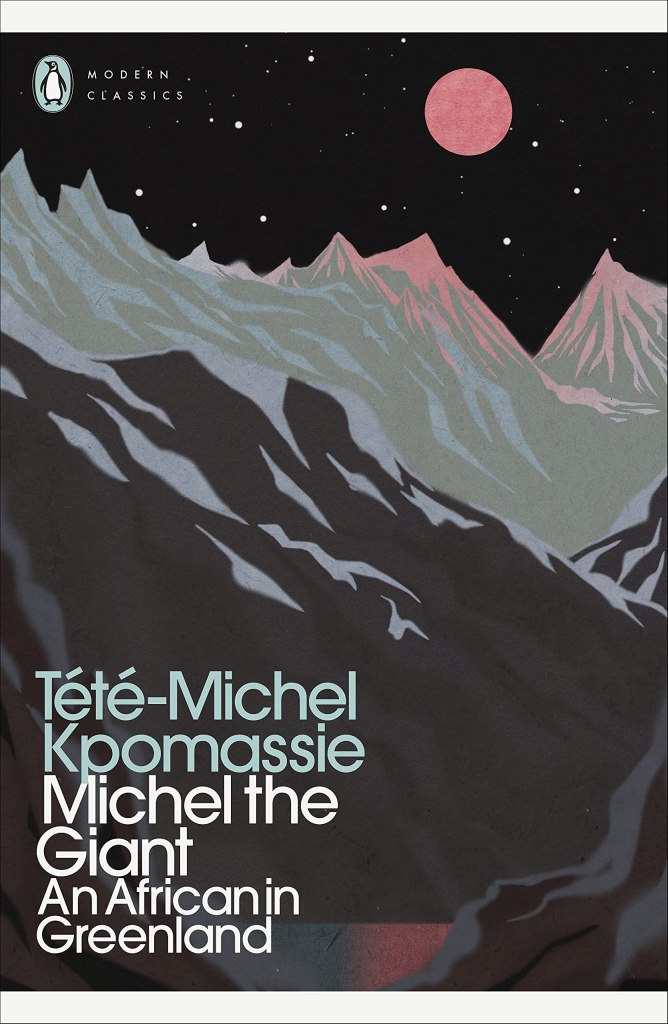
- Author: Tété-Michel Kpomassie
- Book First Published: 1977
- Publisher: Penguin (2022 version)
- Rating: ★★★
How our ratings work:
★★★ – We loved it. Highly recommended, even if you’re not specifically interested in the location
★★☆ – We liked it. Recommended, especially if you’re interested in the location
★☆☆ – We didn’t like it. But it may still appeal to those interested in the location
The Gist
As a boy growing up in Togo, west Africa, Tété-Michel Kpomassie has an encounter with a snake. Taken as a sign, his father plans to send him away to a snake-worshipping tribe.
Kpomassie has other ideas. Discovering a book about Greenland, he becomes obsessed with the idea of going to this country of snow and ice, and most importantly, one devoid of snakes. And so, Kpomassie flees Togo and embarks on an eight year journey, working his way north to reach Greenland.
Once there, he travels the country, searching for the life he saw on the pages of that book. What follows is a highly entertaining and fascinating account of Kpomassie’s experiences embedded with the Greenland Inuit.
The Guts
Unlike so many white European explorers, Kpomassie cannot just buy a plane ticket and fly to Greenland; he does not have the means. Instead, he spends years working his way up through Africa then Europe, saving enough in each country to buy his ticket for the next leg. The bulk of the story concerns his experiences once he reaches Greenland, but we also get insight into Kpomassie’s early life in Togo, plus accounts of the countries he spends time in as he wends northwards.
The writing is humorous, warm and reveals how the native Greenlanders lived during the 1970s. Most of the locals were incredibly welcoming, not just offering food, shelter and friendship, but their beds, with a surprisingly open attitude towards sexual intimacy.
Greenland is enormous and behaviour varies from region to region. The first community Kpomassie’s hunkers down with are not traditional enough for him; he observes how Danish influence has eroded the Inuit culture. They have abandoned hunting and trapping. They work in factories or as commercial fisherman, and entertain themselves with alcohol.
Kpomassie laments their fate; coming from Togo, he had seen a similar destruction of his own culture by outside forces. This was not the Greenland Kpomassie left Togo for. So he heads further north, seeking the seal hunters and sled dogs depicted in his book. It turns out, they live a raw, often brutal existance:
“Most blood-curdling of all, these dogs also eat human beings! It’s not unheard of in the north of Greenland to meet a grieving mother who will tell you: I had nine children altogether, but two were eaten by our huskies.“
Kpomassie’s observations of everyday life are the most interesting part of the book; the food, the social structures, the physical structures in which the Inuit live. But the book stands alone in the sea of such writings; the vast majority of ‘explorer’ books were written by white Europeans or North Americans. Kpomassie gifts us with a double dose of discovery; we learn about the lives of the native Greenlanders – the huskies, the seal hunts, the great ice masses – but through the eyes of an African. As such, An African in Greenland is unusual, gifting us rare insight.
Why read An African in Greenland?
First published in 1977 in French, then translated to English in 1981, the book has come to light again more recently after Penguin released a new ‘Modern Classics’ edition in 2022. And we’re very glad they did. It’s a fascinating insight to the Inuit culture, but transcends an interest in Greenland alone. There is a timeless quality to Kpomassie’s experience and his quest strikes a deeper chord. It’s a tale of setting out to realise a dream, despite colossal challenges.
He knows where he wants to get to, but the journey is long, the route frequently blockaded. Yet Kpomassie plays the long game, never taking his eyes off the prize. There’s a powerful, inspiring theme here; this is a book for all those who have a far-off dream, and strive to reach it.
In closing, this is an intrepid, entertaining, and insightful read. It’s just a shame that An African in Greenland was Kpomassie’s one and only book; he likely had many more adventures worth sharing.

Sam Baldwin is the founder of the Travel Memoir Review, and author of:
• For Fukui’s Sake: Two years in rural Japan
• Dormice & Moonshine: Falling for Slovenia
Support this site by buying his books.

Charming, funny, insightful, and moving. The perfect book for any Slovenophile
Noah Charney, BBC presenter
A rollicking and very affectionate tour
Steve Fallon, author of Lonely Planet Slovenia

*10,000 copies sold*
A fascinating journey and call to action
Mark Hodson, writer, Sunday Times
 The Travel Memoir Review
Leave a comment