Despite some missteps, Simon Winchester’s travelogue provides an interesting look at South Korea in the throes of change
Review by John Ross
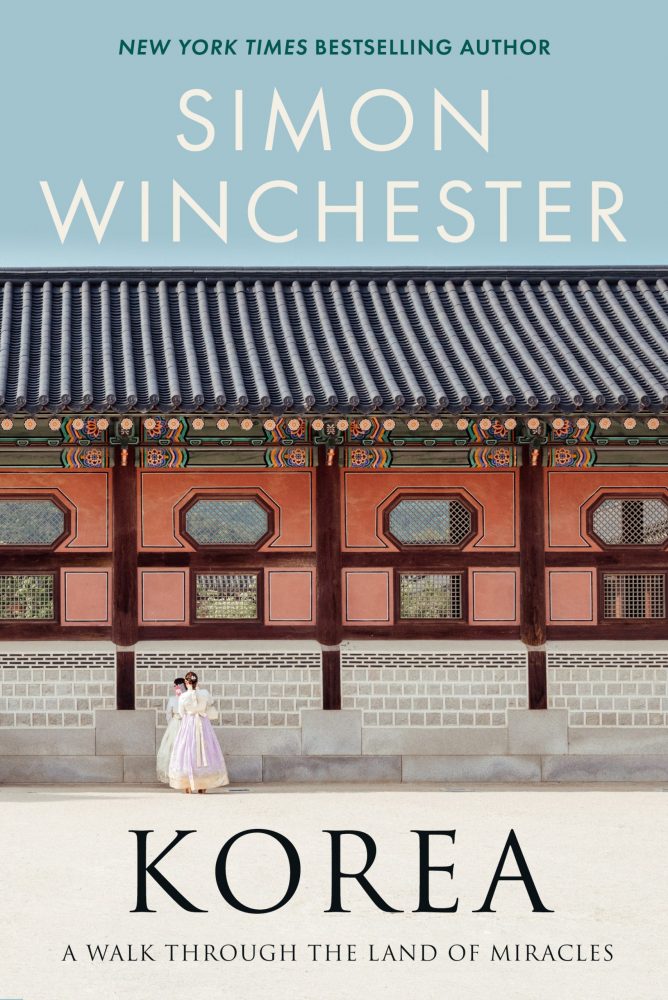
- Author: Simon Winchester
- Book First Published: 1988 (2004)
- Publisher: Viking (Penguin)
- Rating: ★★☆
How our ratings work:
★★★ – Loved it. Highly recommended. Transcends interest in the location alone
★★☆ -Liked it. Recommended, especially if you’re interested in the location
★☆☆ -Didn’t like it. But may still appeal to those interested in the location
The Gist
In 1653, a Dutch vessel sailing from Formosa to Japan was shipwrecked off Jeju Island. The thirty-six survivors were taken to the nearby Korean mainland then marched overland to the royal court in Seoul. The men, now property of the state, were forbidden to ever leave the Hermit Kingdom.
Thirteen years later, however, a handful escaped, among them Hendrick Hamel, who published a journal that gave Europe its first detailed look at Korea. Winchester set out to loosely retrace this journey on foot, traveling from the shipwreck site to Seoul and beyond during a moment of rapid South Korean transformation just before the 1988 Olympics.
Along the way, we get an up-close look at modern South Korea. And in a 2004 update to the original book, Winchester adds a lengthy preface detailing several trips to the North Korean capital of Pyongyang.
The Guts
Winchester spent two months in South Korea in the spring of 1987, of which several weeks were devoted to walking the length of the country. The travelogue’s premise suggests an “in the footsteps” narrative, but the Hendrick Hamel connection is mostly decorative. Each chapter opens with a short excerpt from Hamel’s journal, but these rarely connect to what follows.
Still, the book is packed with interesting encounters, descriptions, and details about the culture and history; of the latter, standouts for me were a profile of sixteenth-century naval genius, Yi Sun-sin; a history of Korea’s unique writing script; and a recounting of an uprising and massacre in the city of Kwangju in 1980.
A thread running through the book which left a bad taste in my mouth was Winchester’s anti-Americanism. The Americans he met, mostly military personnel, were dull, ignorant, and boorish. In contrast, Winchester says of North Korea that it deserves some credit:
“…..for the fact that it has as yet not been entirely swallowed up by the globalized Coca-Cola culture of its neighbours, that it labours still to be entirely free from influence from America…..”
Another blemish is the way Winchester describes the Korean women he meets on his travels in terms of their attractiveness. They’re “pretty,” “attractive,” or “beautiful”: the author – aged 42 and between wives at the time of his trip – seems to be sizing them up for extra-curricular activity. Korean women, he muses:
“…..present a most bewildering and complicated mixture of emotions and attitudes. One woman can at the same moment be delightfully shy and yet alarmingly forward, liberated and yet coquettishly deferential, sexually ignorant and yet wantonly promiscuous, aggressive and argumentative and yet strangely sulky and passive.”
Why Read Korea?
Korea is an easy yet informative read. Although the book is in some respects dated, that is a plus if you consider Winchester’s visit as a window into a pivotal time in modern history; the economic rise of South Korea and its transition to democracy.
Protests by students and workers preceded and followed his trip through the Land of the Morning Calm, which turned out to be the last days of authoritarian military rule. With the 1988 Olympic Summer Games – supposed to be Korea’s coming out party à la Tokyo in 1964 – in danger of being disrupted, the regime relented: elections were held and lasting democratic reforms introduced.
Despite my criticisms of Korea, I still recommend the book. The Hendrick Hamel story is a fascinating one. And Winchester is not a dull narrator. Far from it. He’s an accomplished writer at the sentence wordsmith level and also a good storyteller; his blend of travel, journalistic commentary, and history remains a winning template.
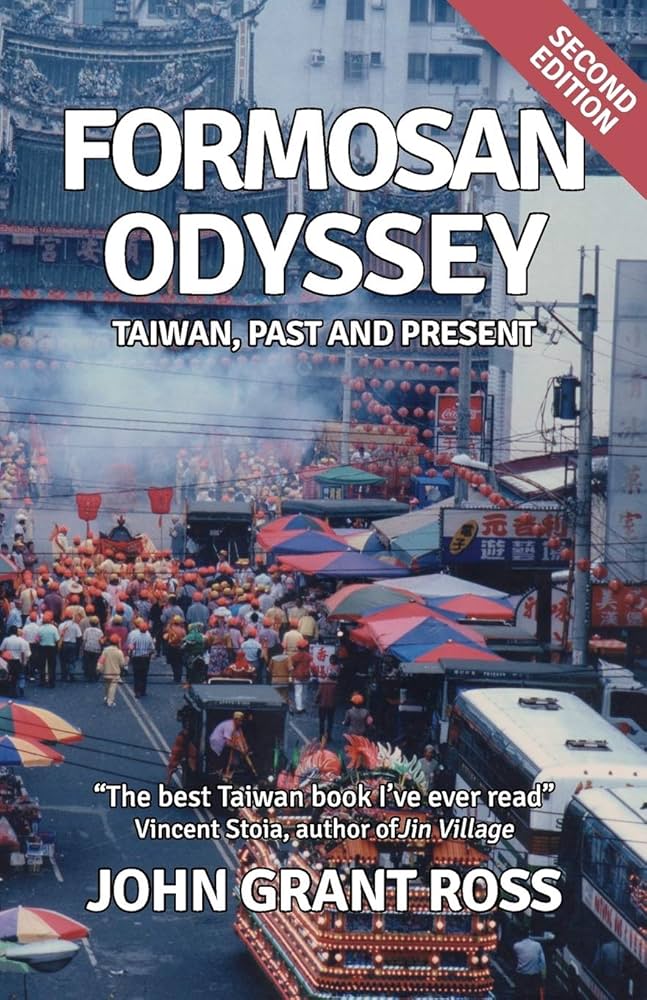
John Ross, a New Zealander living in Taiwan, is the author of Formosan Odyssey, You Don’t Know China, and Taiwan in 100 Books.
He is also the co-founder of Camphor Press and Plum Rain Press. John co-hosts Formosa Files, a podcast on the history of Taiwan, and the Bookish Asia podcast.
Support this site by buying his books.


Leave a Reply