A mother and daughter travel to Paris, overcoming multiple challenges to make it the
trip of their dreams.
Review by Sarah Coomber
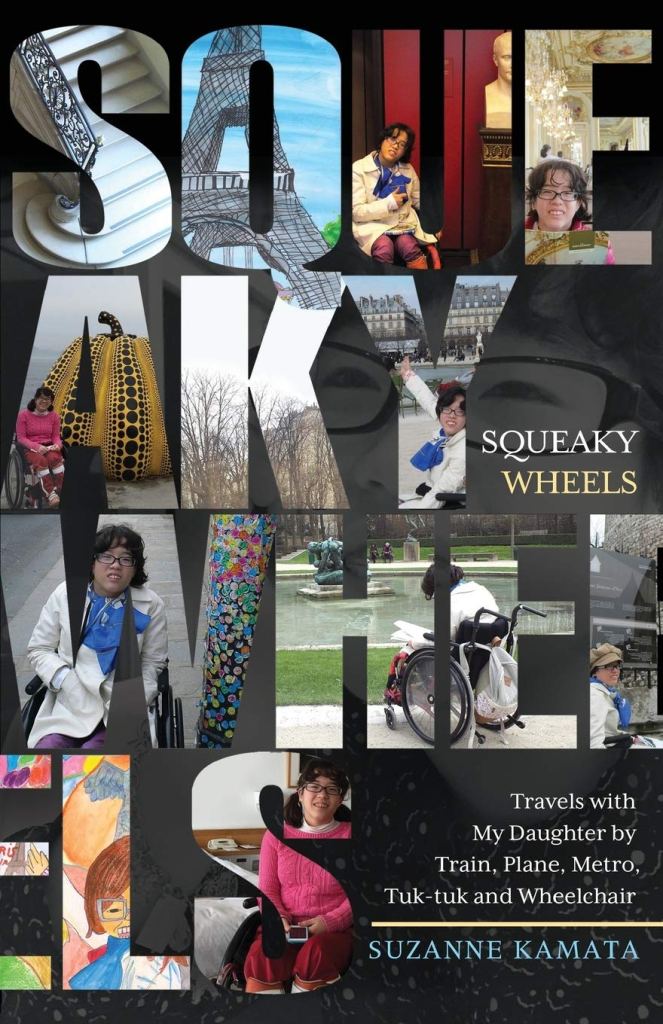
- Author: Suzanne Kamata
- Book First Published: 2019
- Publisher: Wyatt-MacKenizie Publishing
- Rating: ★★★
How our ratings work:
★★★ – Loved it. Highly recommended. Transcends interest in the location alone
★★☆ – Liked it. Recommended, especially if you’re interested in the location
★☆☆ – Didn’t like it. But may still appeal to those interested in the location
The Gist
Suzanne Kamata was a young, single American woman when she first travelled to Paris and fell in love with its beauty, culture and language. She imagined someday having a daughter who would return with her for a visit. Kamata later finds work in Japan, where she marries a Japanese man, and they welcome twin babies, a boy and a girl.
Over the next few years, Kamata and her husband first struggle and then learn to accept that their daughter, Lilia, has multiple disabilities. Kamata throws her energy into supporting Lilia, discovering both her daughter’s limitations and her gifts, and building up the courage to take her on the trip she had imagined years earlier.
The Guts
In addition to being a travel memoir, this book is the story of a family facing the challenges of raising a child with disabilities. We watch as Kamata’s identity shifts from being a new mom to being the mom of a child with special needs. As the extent of Lilia’s disabilities emerges, she seeks out opportunities to help her daughter medically, socially and educationally.
Gradually her gaze expands to explore how special needs are addressed—and not—in different cultures and how the “squeaky wheel” is regarded. Does it get the grease?
In Japan, Kamata sees that people are often hesitant to offer or ask for help. In the United States, she watches as people fail to anticipate Lilia’s needs. In France, however, Kamata finds that complete strangers jump in to help her with Lilia, assisting them up staircases and onto trains. It is while they are in France that Kamata decides, “it’s not a failure to accept help when it’s offered.” She is “done with being a martyr.”
When she and Lilia arrive at the Eiffel Tower for a special dinner, they see that a flight of stairs stands between them and the elevator to the restaurant. Wearing high heels and a short sequined dress, Kamata struggles to help Lilia, whose special-occasion shoes keep falling off. She begins to regret embarking on such a challenging outing.
But then her attitude shifts:
“If we don’t go out and show others how hard it is to get around,”
she writes,
“if we don’t make ourselves a burden, they will continue in oblivion. They’ll be able to ignore the inaccessibility of their restaurant. We have to do this for wheelchair users everywhere.”
Kamata determines that without squeaky wheels, nothing will change.
Why read Squeaky Wheels?
Kamata’s story is important, in part because it serves as a “squeaky wheel,” bringing visibility to the experience of traveling with disabilities.
As a fellow mom of a child with disabilities, I felt seen when reading this book. Although my son’s challenges are not physical, I too have experienced the dread Kamata describes prior to a longed-for trip, wondering how to muster up the energy it takes to travel with someone for whom public transportation and tourism are not designed. Like her, I have had to learn to ask for help, to insist on special accommodations and to go at our own pace.
And yet Squeaky Wheels points to a broader story as well, one that goes beyond the world of disabilities. It addresses the question of what happens when we, as parents, friends, partners and colleagues, bring expectations and dreams to our relationships but find they are not shared—or at least not in the way we had imagined?
The triumph of Kamata’s story is that she holds on to her dream, shares it with her daughter, and then releases her expectations of how it will go and what will happen next. In so doing, mother and daughter share an experience that strengthens their bond while giving each of them the opportunity to grow and change.

Sarah Coomber is the author of The Same Moon: a memoir.
She currently writes about life in the sandwich generation at Sandwich Season.
Support this site by buying her books.


Leave a Reply