Trekking through Nepal’s Himalayas on a scientific expedition, a middle-aged widower develops a deeper understanding of his own inner landscape
Review by Sarah Coomber
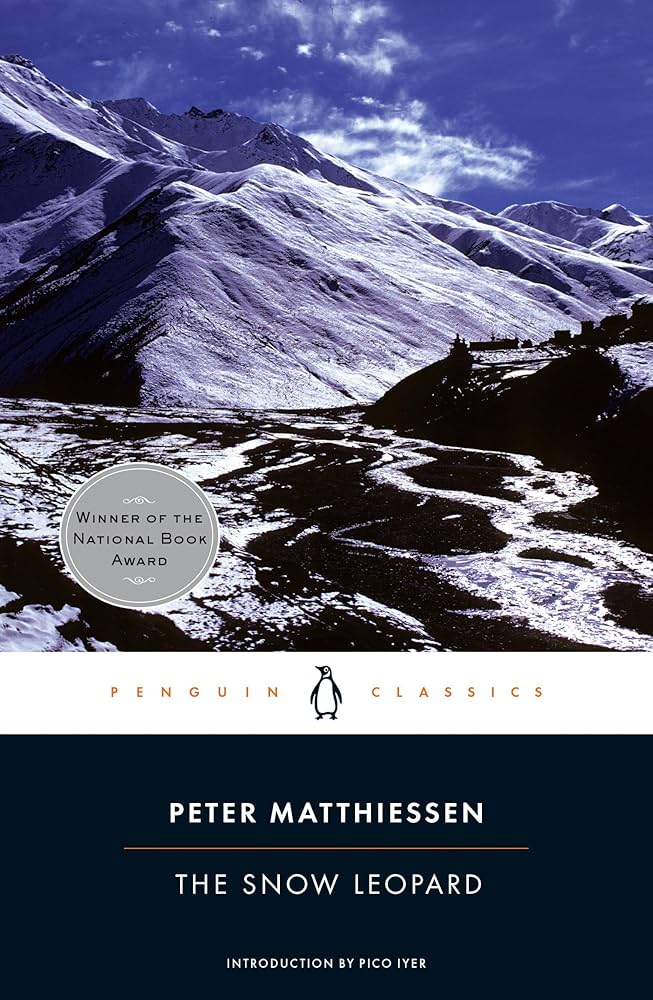
- Author: Peter Matthiessen
- Book First Published: 1978 (1987)
- Publisher: The Viking Press (Penguin Books)
- Rating: ★★☆
How our ratings work:
★★★ – Loved it. Highly recommended. Transcends interest in the location alone
★★☆ – Liked it. Recommended, especially if you’re interested in the location
★☆☆ -Didn’t like it. But may still appeal to those interested in the location
The Gist
In 1973, Peter Matthiessen (1927-2014) embarks on a journey to the isolated Inner Dolpo region of Nepal. He’s been invited by the American field biologist George Schaller (b. 1933), who is gathering data on the Himalayan blue sheep.
While watching for sheep, snow leopard, wolves and yeti, Matthiessen documents in extraordinary detail their two-month odyssey through a spectacular and forbidding wilderness dotted with human settlements of varying temperaments.
Meanwhile, Matthiessen takes us on his internal journey, reflecting on Buddhism, his wife’s death the previous year and his discoveries of what makes life meaningful.
The Guts
The expedition begins in Kathmandu, where Matthiessen, Schaller and two Sherpas board a Land Rover for the drive to Pokhara, literally the end of the road. From there, they cover 250 miles on foot, their ever-evolving party making its way toward Shey Gompa, the Crystal Monastery, and back.
Matthiessen arranges the story as a daily journal built around their adventures and misadventures. While he keeps meticulous records of the people, plants and animals they see, hear and encounter, his descriptions of the physical part of the journey are most viscerally memorable.
We creep with him across mountain ledges and ice bridges, and take off our boots to ford nearly frozen streams. We break camp early and time our departures with the sun, to take advantage of the icy crust that prevents sinking in deep mountain snow—until it doesn’t. We explore high mountain dwellings and temples, hearing prayer flags snapping in the wind.
Along the way, Matthiessen explores different schools of Buddhism and incorporates his own Zen studies and practice. He also introduces us to the people he encounters and often befriends despite lack of a common language—the sherpas and porters, lamas and monks, mothers and children, traders and farmers.
What is particularly fascinating is how, as the journey progresses, his understanding of people evolves and his rambling thoughts quiet, the thin mountain air appearing to reset his internal compass. This reflective passage comes from the last quarter of the book:
“I love the common miracles—the murmur of my friends at evening, the clay fires of smudgy juniper, the coarse dull food, the hardship and simplicity, the contentment of doing one thing at a time: when I take my blue tin cup into my hand, that is all I do. We have had no news of modern times since late September, and will have none until December, and gradually my mind has cleared itself, and wind and sun pour through my head, as through a bell. Though we talk little here, I am never lonely; I am returned into myself.”
Why read The Snow Leopard?
The Snow Leopard is, especially in the first half (or more), a dense read. If you are not familiar with western Nepal, you will likely find yourself flipping back and forth to the maps at the front of the book.
Same holds if you are not intimate with the flora and fauna of the region, or with Buddhist studies. The book does not contain a glossary, but we can be thankful that half a century after Matthiessen, Schaller and their colleagues ranged through the Himalayas we have the web available to fill in details of people, animals, places, historical events and concepts, plus definitions of words in Matthiessen’s prolific vocabulary.
The Snow Leopard offers glorious descriptions of a snowy land, and an intimate look at how a change of scenery can be transformative, leading to a renewed peace of mind. The transparency with which Matthiessen shares his growing self- and world-knowledge is, in places, transcendent, his ideas floating off the page, reminiscent of haiku.
I imagine the Inner Dolpo region has evolved since Matthiessen’s adventure, and surely today we would use different nomenclature to describe some people and circumstances.
But the internal landscape that Matthiessen explores in The Snow Leopard is no different from the one we explore today. And his effort to evolve into a more fully realized person remains a familiar and timeless quest.

Sarah Coomber is the author of The Same Moon: a memoir.
She currently writes about life in the sandwich generation at Sandwich Season.
Support this site by buying her books.
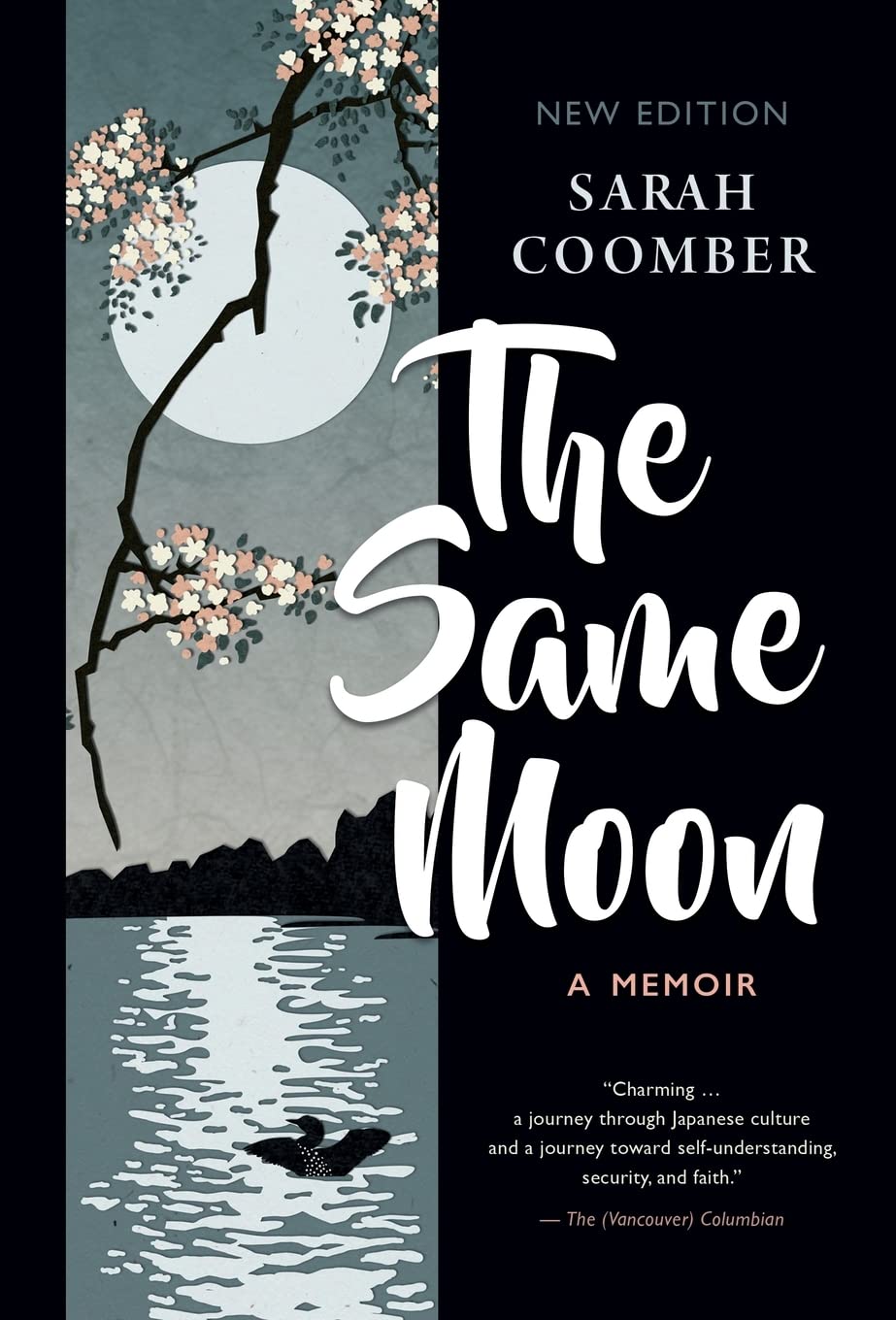
Charming. A journey through Japanese culture and a journey toward self-understanding, security and faith.
Scott Hewitt, The (Vancouver) Columbian
Possibly the only book about the JET experience written from a woman’s point of view.
Amy Chavez, Books on Asia podcast
 The Travel Memoir Review
Leave a comment